
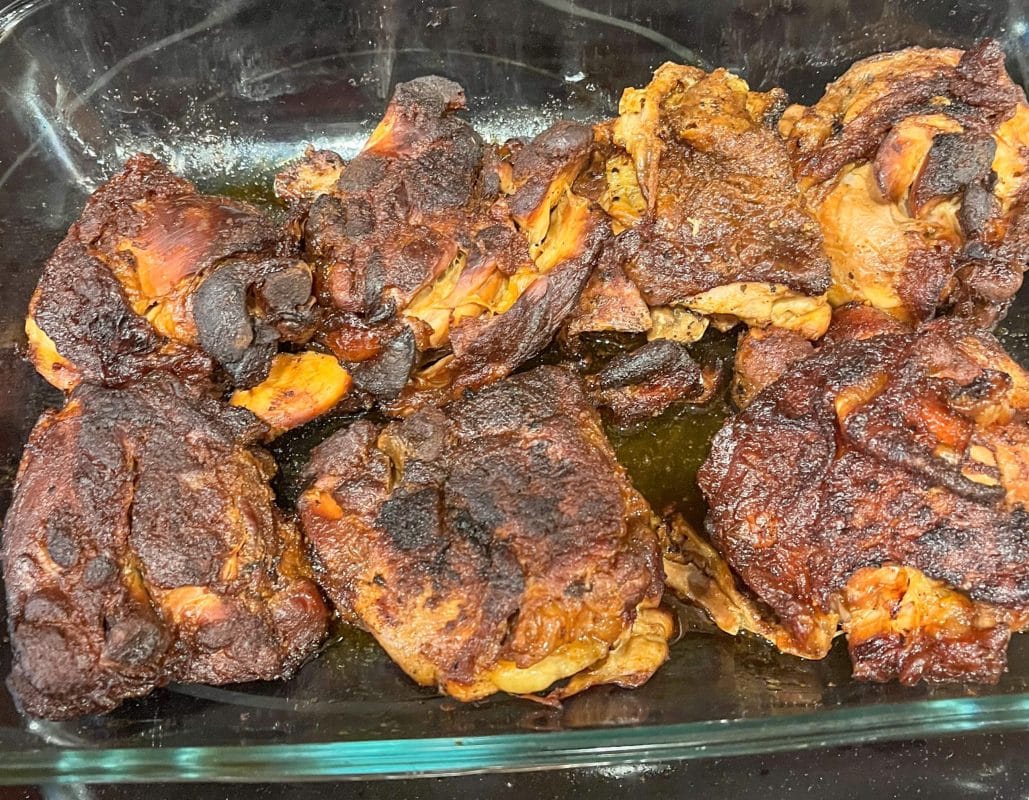
Chicken is the most common thing people cook with BBQ rub — and it’s also the easiest to get wrong. Too much rub and it’s over-seasoned. Too little and it’s bland. Applied at the wrong time and it doesn’t stick. Cooked wrong and it dries out before the rub has time to work.
Here’s a complete guide to using BBQ rub on chicken the right way, from application through cook.
Choosing the Right Rub for Chicken
Chicken is a mild protein. It doesn’t have the fat content of pork belly or the beefy richness of brisket, which means the rub needs to complement rather than overwhelm.
What works on chicken:
- Savory-forward blends: Garlic, onion, herbs, paprika. These enhance the chicken without masking it.
- Mild heat: A touch of black pepper or mild chile. Heavy cayenne tends to overshadow chicken’s subtle flavor.
- Light sweetness: Brown sugar or paprika-based sweetness for caramelization and color. Especially good on thighs and drumsticks.
- Smoke character: Hickory-smoked spices add depth without needing a smoker.
The SmokED Birdie Rub is formulated specifically for poultry — a Memphis-style dry rub built around savory depth with mild heat and smoke character from hickory-smoked spices. The Par Rub is a strong choice on leaner proteins like chicken breast, with its sodium content printed on the panel.
How Much Rub to Use on Chicken
The general rule: 1 tablespoon of rub per pound of chicken for a standard coating, up to 2 tablespoons per pound for a heavier crust.
Chicken pieces (thighs, drumsticks, breasts) need less than a whole bird. A rack of thighs needs about 3-4 tablespoons total. A whole chicken needs 4-6 tablespoons, including inside the cavity.
Don’t under-season. The rub is your flavor foundation. Chicken that isn’t generously seasoned tastes flat no matter how good the cook is.
When to Apply the Rub
You have three options:
Overnight (Best)
Apply the rub the night before and refrigerate uncovered. The salt in the rub draws moisture to the surface, which then gets reabsorbed along with the spices. This is essentially a dry brine — the chicken seasons from the inside out and the surface dries slightly, which promotes crispy skin.
1-2 Hours Before (Good)
Apply and let it rest at room temperature or in the fridge. The rub adheres well and you get some surface seasoning. Not as deep as overnight but significantly better than cooking immediately.
Right Before Cooking (Acceptable)
This works but you miss the dry brine benefit. The rub stays on the surface and forms more of a crust than a seasoned interior. Still good — just different.
Application Technique
- Pat the chicken dry first: Use paper towels to remove surface moisture. Dry surface = better rub adhesion, crispier skin.
- Use a binder if needed: A thin coat of olive oil or yellow mustard helps the rub stick, especially on skinless pieces. For skin-on chicken, the fat in the skin does this naturally.
- Season under the skin: For whole birds or bone-in breasts, gently separate the skin from the meat and apply rub directly to the flesh. This is where it actually penetrates and flavors the meat.
- Pat, don’t rub: Press the seasoning in gently. Rubbing aggressively can displace it or make the surface uneven.
- Season all sides: Including the underside. Every surface that faces the heat should be seasoned.
Cooking Methods and How They Affect the Rub
Grill (Direct Heat)
High heat caramelizes the rub quickly. Watch for flare-ups if your rub has sugar. Use a two-zone setup: sear over direct heat to set the crust, then finish over indirect heat to cook through without burning the rub.
Smoker (Indirect, Low and Slow)
The best method for getting full rub flavor into the chicken. Low temperatures (225-275 F) let the rub develop slowly. Use hickory-smoked rubs for double smoke character — the rub and the wood smoke work together.
Oven (350-425 F)
Works well. The rub caramelizes at oven temperatures and builds a flavorful crust. For skin-on chicken, finish under the broiler for 2-3 minutes to crisp the skin after the rub has set.
Air Fryer (375-400 F)
Surprisingly effective. The circulating hot air sets the rub crust quickly and produces crispy skin without the mess of deep frying. Apply rub lightly — the air fryer’s concentrated heat can intensify flavors, so less is more here.
Internal Temperature — Don’t Guess
Chicken is done at 165 F internal temperature at the thickest part (away from bone). For thighs and drumsticks, you can cook to 175-185 F — dark meat becomes more tender as it goes higher. Breast meat dries out above 165 F, so pull it right at temperature.
The rub looks dark brown or almost black on well-cooked chicken — that’s caramelization and the Maillard reaction, not burning. As long as the interior temperature is right, the exterior darkness is a good thing.