
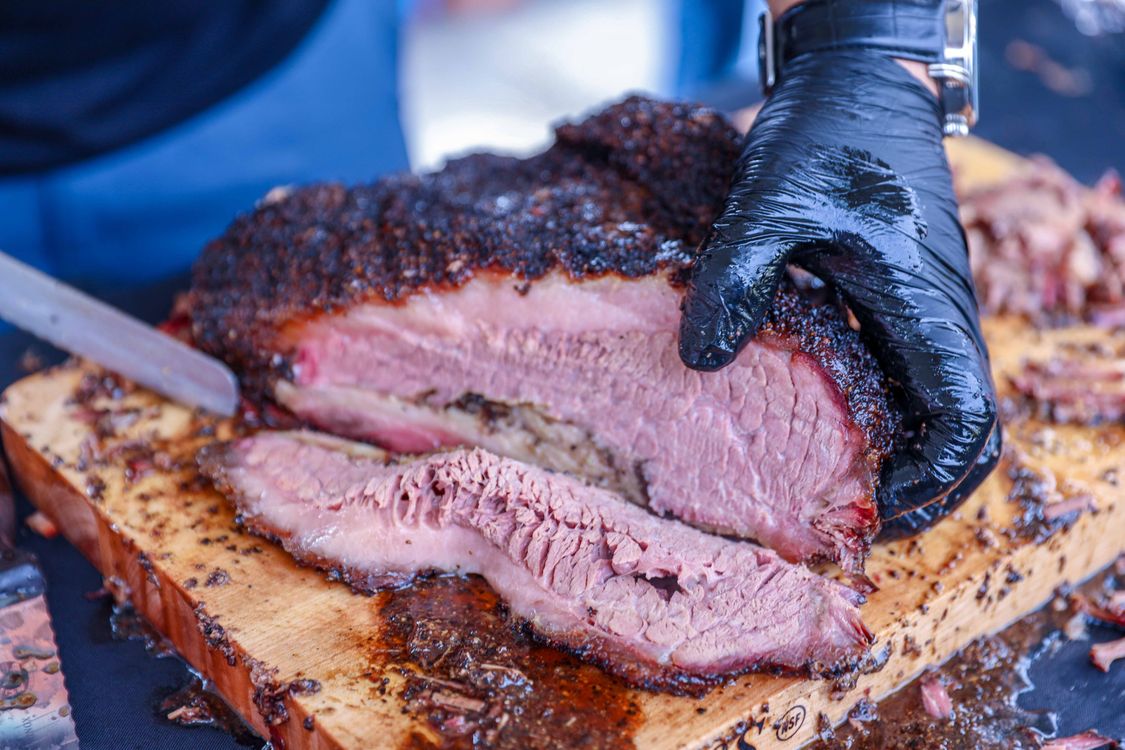
Brisket is an unforgiving cut. It takes 10-16 hours to cook properly, it costs real money, and the rub you choose is locked in from the start. There’s no adjusting it mid-cook. So getting the rub right matters more on brisket than almost any other cut.
This guide covers what makes a great brisket rub, the Texas vs. everything-else debate, and the specific rubs that hold up to a full brisket cook.
What a Brisket Rub Actually Needs to Do
Brisket is cooked low and slow — typically 225-250 F — for many hours. During that time, the rub has to:
- Build bark: The crust that forms on the exterior. Good bark requires sugar (for caramelization), salt (for moisture extraction and seasoning), and spices that can handle long exposure to low heat without burning.
- Season deep: A brisket is a thick, fatty cut. The rub only penetrates so far, but a generous application and long rest period (overnight ideally) helps.
- Complement smoke: If you’re cooking over real wood, the smoke is already adding flavor. Your rub should work with that smoke, not fight it.
- Not burn: High-sugar rubs that work fine at 350 F can scorch at lower temps over 12 hours. Balance matters.
The Texas Approach: Salt, Pepper, Nothing Else
The purist Texas brisket method uses a simple SPG — salt, pepper, garlic — or just salt and pepper (the “Dalmatian rub”). The argument is that a well-sourced brisket cooked over post oak or hickory doesn’t need much else. The meat and the smoke carry the flavor, which is exactly why we smoke our own salt rather than relying on the rest of the rub to do the work.
This approach works beautifully when the execution is flawless. When the meat quality is high, the wood is right, and the pitmaster knows what they’re doing, a simple rub is all you need.
Where it falls short: if you’re cooking at home without a $5,000 offset smoker and premium Wagyu brisket, a simple rub can leave the bark thin and the flavor one-dimensional.
The Case for a More Complex Brisket Rub
For most backyard cooks, adding paprika, garlic, onion, and a small amount of brown sugar to the base builds more reliable bark and more layered flavor. The spices contribute complexity that compensates for less-than-perfect smoke management or meat quality.
The key is keeping the flavors complementary — savory, smoky, with just enough sweetness to promote bark — rather than sweet-dominant, which can taste more like pulled pork than brisket.
SmokED Stuff Rubs for Brisket
Pitching Wedge — The Go-To
The SmokED Pitching Wedge is built specifically for beef — a Texas-style blend with hickory-smoked spices that complement rather than compete with the smoke from your cooker. The hickory-smoked ingredients mean the rub itself brings smoke character, which layers with the cook smoke rather than getting lost in it. This is the rub for a full packer brisket.
Bunker Rub — Pure SPG
If you want the Texas purist approach but with more flavor impact than raw salt, pepper, and garlic, the Bunker is the answer. Salt, pepper, and garlic — all hickory-smoked individually before blending. It’s the Dalmatian rub, but the smoking process builds in flavor that raw SPG can’t match.
Texas Wedge — Bold and Dark
Ancho chile, coffee, cocoa, and hickory-smoked spices. The Texas Wedge builds a dark, bold bark with a bitter-savory character that pairs especially well with beef fat. If you want a dramatic bark color and a more complex flavor profile, this is the brisket rub.
How to Apply Rub to Brisket
- Trim first: Leave about 1/4 inch of fat cap. More than that insulates too much; less than that dries out.
- Binder (optional): A thin coat of yellow mustard or olive oil helps the rub adhere. The mustard flavor cooks off completely — you won’t taste it.
- Apply generously: Brisket is a large, thick cut. Apply rub on all sides with a firm pat-in motion. Don’t rub it in — that disrupts the crust formation.
- Rest overnight: Refrigerate the rubbed brisket uncovered for 8-12 hours. The salt pulls moisture to the surface and then back in, seasoning deeper into the meat.
- Let it temper: Pull the brisket from the fridge 30-60 minutes before the cook to bring it closer to room temperature.
Common Brisket Rub Mistakes
- Too much sugar: Sugar burns. On a 12-hour cook at 225 F it’s less of an issue than at high heat, but excessive sugar (more than 10-15% of the blend) can make the bark bitter.
- Under-seasoning: Brisket is a massive piece of meat. A light dusting won’t penetrate far enough. Be generous.
- Applying too late: If you’re applying rub right before the cook, you lose the benefit of the rest period. Apply the night before whenever possible.
- Using a pork rub on beef: Pork rubs tend toward sweet and fruity — apple, brown sugar, mild pepper. Beef needs savory and bold. The flavor profiles are different enough that it matters.