
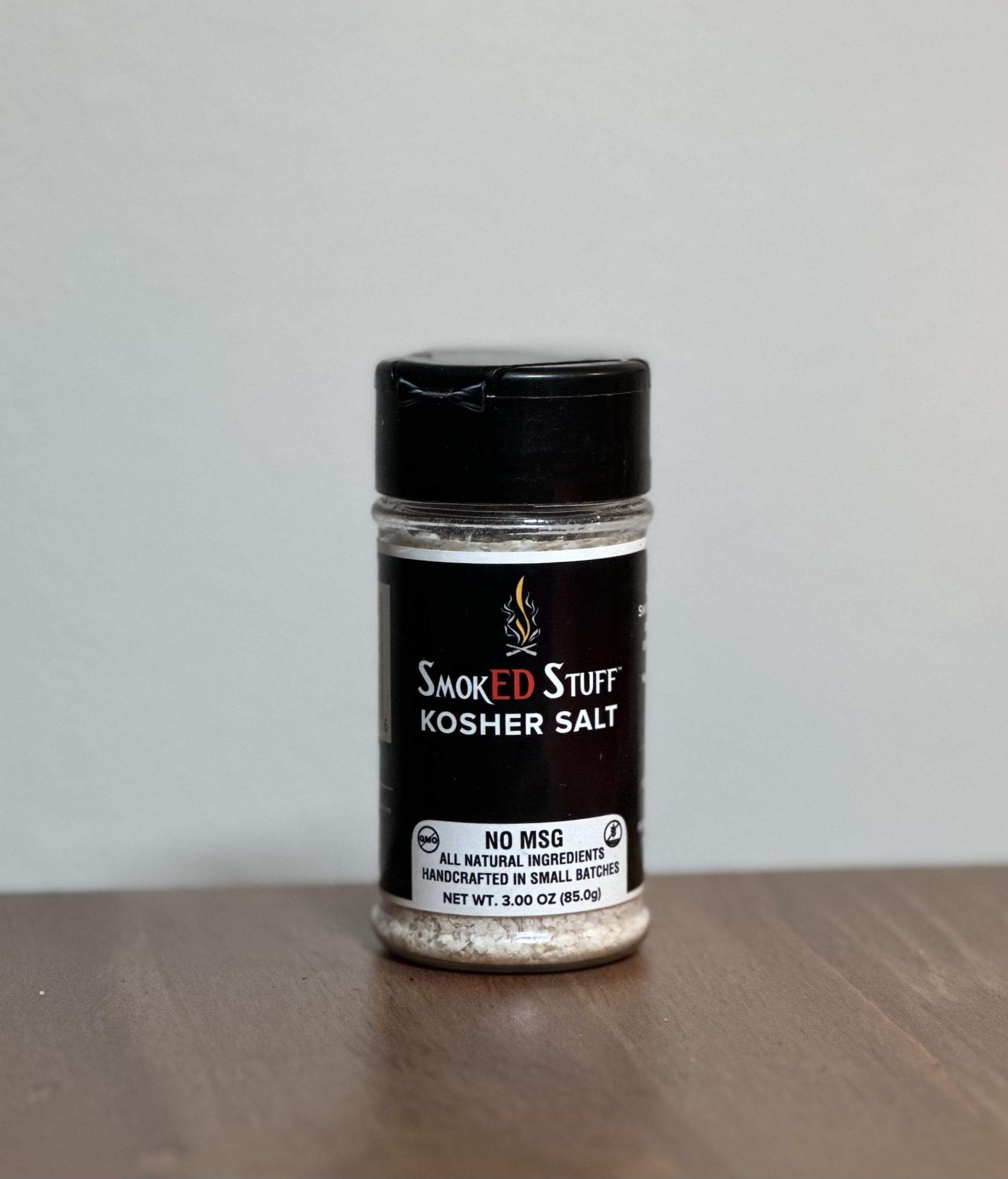
If you are watching how much salt goes on your food, BBQ rub is a sensible place to look. It is one of the few seasonings you apply by the tablespoon rather than the pinch. This guide covers what “low sodium” legally means, how to read a rub label, and exactly where every SmokED Stuff blend lands, including the ones that do not qualify.
What “Low Sodium” Legally Means
There is an FDA rule for this, and it is stricter than most people assume. Under 21 CFR 101.61, a food may be labeled low sodium only if it contains 140 mg of sodium or less per serving and, for foods with a small serving size such as spices and rubs, 140 mg or less per 50 grams as well.
That second condition is what catches dry rubs. A teaspoon of rub is only a few grams, so a blend can look modest per serving and still miss the per-50-gram threshold by a wide margin. Most BBQ rubs on the market do not meet the legal definition of low sodium. Neither do most of ours, and we would rather say that plainly than lean on a term we have not earned.
The full set of terms:
- Sodium free: less than 5 mg per serving.
- Very low sodium: 35 mg or less per serving.
- Low sodium: 140 mg or less per serving, and per 50 g.
- Reduced sodium: at least 25% less than a specific, named reference product.
- Salt free: must also meet the sodium-free standard.
Where the SmokED Stuff Line Actually Lands
Here is the whole lineup per 1 teaspoon, lowest to highest, with nothing rounded in our favor.
| Product | Sodium per 1 tsp | % Daily Value |
|---|---|---|
| SmokED Black Pepper | 0 mg | 0% |
| SmokED Brown Sugar | 0 mg | 0% |
| SmokED Driver Rub (salt-free) | 0 mg | 0% |
| SmokED Garlic Powder | 0 mg | 0% |
| SmokED Onion Powder | 0 mg | 0% |
| SmokED Par Rub | 80 mg | 3% |
| SmokED Pitching Wedge | 180 mg | 8% |
| SmokED Tee Box Rub | 180 mg | 8% |
| SmokED Caddie Rub | 200 mg | 9% |
| SmokED Texas Wedge Rub | 280 mg | 12% |
| SmokED Birdie Rub | 370 mg | 16% |
| SmokED Honey Putter Rub | 380 mg | 17% |
| SmokED Bunker Rub | 945 mg | 41% |
| SmokED Bogey Rub | 339 mg | 15% |
| SmokED Kosher Salt | 2,160 mg | 94% |
One complete BBQ rub in the line meets the sodium-free standard: the Driver Rub, at 0 mg. It is built around three peppers, garlic and citrus doing the work salt normally does.
The single-ingredient spices are 0 mg as well, though that is true of nearly every pure ground spice on the market and is not something unique to us.
At the other end, the Bunker rub is salt-forward by design and is not a low-sodium product. Bunker is a Texas SPG: salt is the first ingredient, and it is supposed to be. Kosher salt is salt. Those figures are printed above for the same reason every ingredient is printed on the panel.
Why Most BBQ Rubs Are High in Sodium
Salt does a lot of work in a rub. It draws moisture to the surface, helps the rub adhere, builds bark during a long cook, and amplifies every other flavor in the blend. Manufacturers lean on it because it is cheap and it works.
The problem is that salt becomes the dominant flavor rather than a supporting one. When a rub is 40% salt by weight, and some are, you are not really tasting the spices. A blend built with less salt has to replace that load with flavor-forward ingredients that can carry the rub on their own.
Salt-Free and Lower-Sodium Are Not the Same Thing
Salt-free rubs contain no sodium chloride, and often no sodium of any kind. They are built entirely around spices, herbs, and sometimes acids like citric acid or lemon peel. The Driver Rub is salt-free. It suits cooks who want to season the meat and then add salt separately, in a measured amount, or not at all.
Lower-sodium rubs still contain salt, just less of it. They contribute to bark and flavor development without dominating the blend.
What to Look For on the Label
- Salt position in the ingredient list. Ingredients are listed by weight. If salt is first or second, the rub is salt-heavy.
- Hidden sodium sources. Soy sauce powder, MSG, celery powder and sodium phosphate all add sodium without the word “salt” appearing.
- Serving size. A quarter-teaspoon serving makes any number look small. If you are using two tablespoons on a rack of ribs, multiply accordingly.
- “No MSG” is not a sodium claim. MSG is a sodium compound, but removing it does not make a salt-heavy rub low in sodium.
- Look for an actual figure. A product that will not print milligrams is asking you to take its word for it.
Getting Flavor Without Leaning on Salt
- Longer cooks. Brisket, pork shoulder and ribs give spices time to bloom, so they need less salt pushing them forward.
- Layer it. Apply a low-salt rub, then add a light finishing salt at the end if you want it. That way you control the amount.
- Overnight rests. A rub applied the night before still seasons the surface. Salt-free versions draw out less moisture, which helps on lean cuts like chicken breast.
- Chicken and fish. Leaner proteins that taste oversalted under a heavy rub respond well to a lighter one.
Common Questions
Can I still get a good bark with a salt-free rub?
Yes. Bark forms through the Maillard reaction and the caramelization of sugars, not salt alone. A salt-free rub with sugar, paprika and spices will still build bark. It may be slightly less pronounced than with a salt-heavy rub, but the difference is smaller than most people expect on a long, low-and-slow cook.
Should I add salt separately if I use a salt-free rub?
That is entirely up to you. Adding a measured amount of kosher salt after applying the rub lets you know exactly how much you are using, which is the point of starting from zero.
How much rub should I use?
One to two tablespoons per pound of meat gives a thin crust; up to three tablespoons per pound gives a heavier bark.
All SmokED Stuff products are MSG-free, gluten-free and non-GMO. Veteran-made and shipped direct from smokedstuff.com.
Figures above are a guide. Always check the nutrition panel on the jar in your hand.