
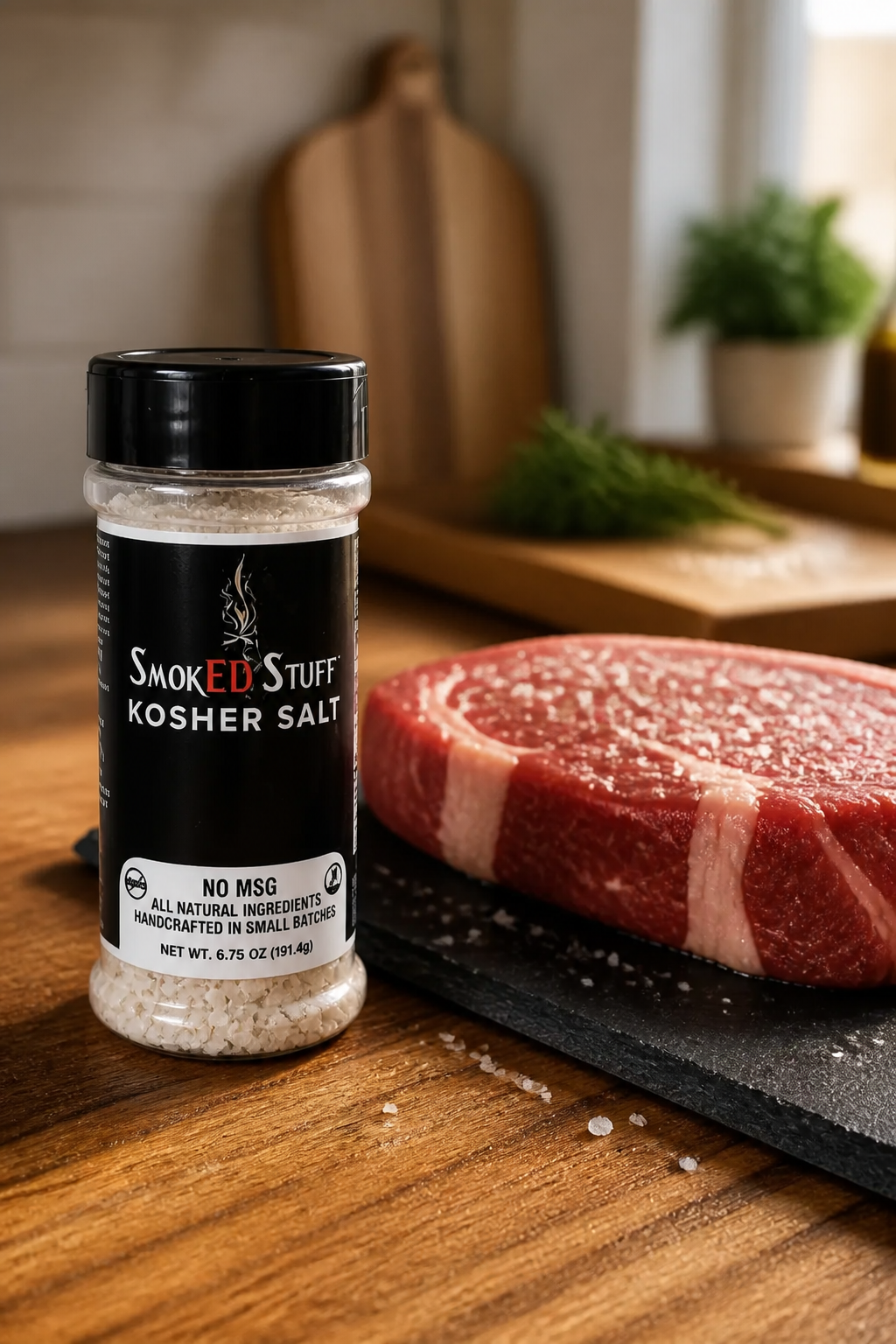
Kosher salt became the standard in professional kitchens for reasons most home cooks don’t know. Here’s the full story — and what hardwood smoke adds to it.
The History of Kosher Salt
Kosher salt gets its name not from the Jewish dietary laws themselves, but from its use in the koshering process — specifically the drawing out of blood from meat, which requires coarse, flat flake salt that can grip the surface of the meat. The large, irregular flakes are the result of a specific evaporation process that creates flat crystal platelets rather than the cubic crystals of table salt. Chefs began adopting kosher salt in professional kitchens in the mid-20th century for its clean flavor (no iodine or anti-caking additives), its easy-to-control application by hand, and its ability to dissolve quickly on meat surfaces. Today it’s the standard salt in most professional kitchens in America.
🦠 Did You Know?
Kosher salt is significantly less salty by volume than table salt because of its flake structure — the flat crystals don’t pack as densely. One teaspoon of table salt is roughly equivalent to 1.5 to 2 teaspoons of kosher salt depending on the brand. This is why recipes that call for kosher salt should never be substituted 1:1 with table salt — you’ll dramatically over-season your food.
The SmokED Difference
SmokED Kosher Salt is pure and direct — just kosher flake salt smoked over real hardwood. No additives, no flavor enhancers, nothing else. The wood smoke gives this salt a warm, savory depth you won’t get from plain or iodized kosher salt. It’s the most versatile spice in the SmokED Stuff lineup: use it anywhere you’d reach for kosher salt and get real hardwood smoke flavor for free.