
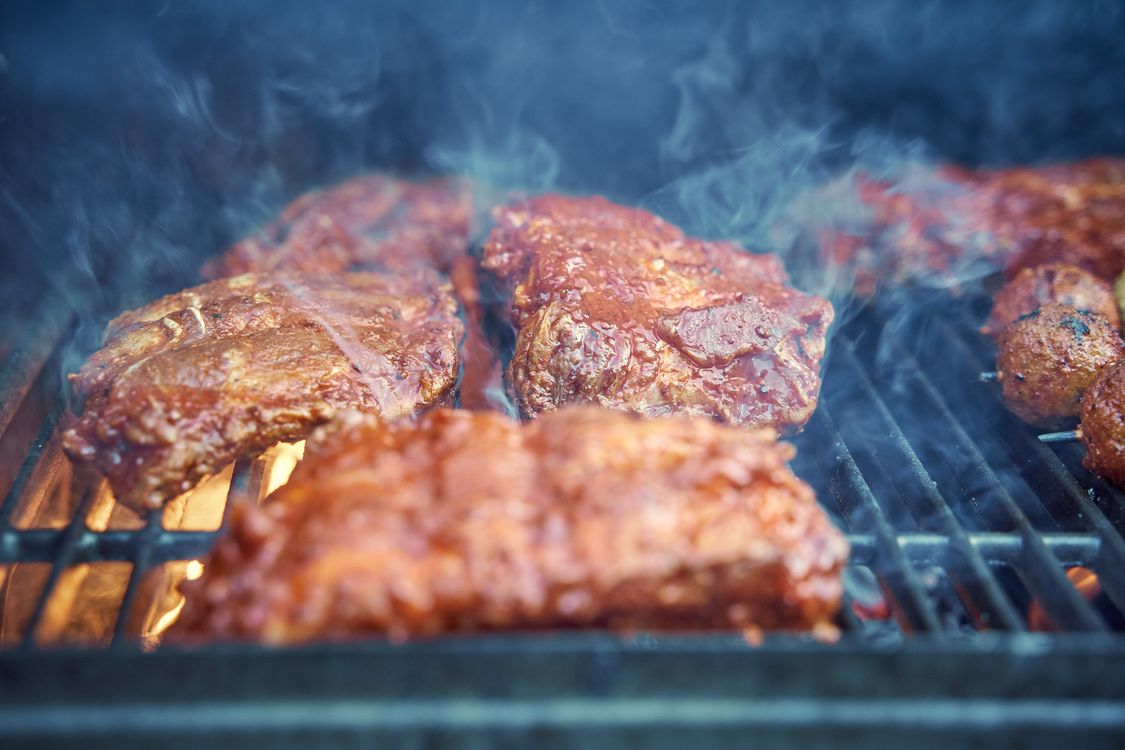
The Right Way to Reheat Leftover BBQ (Without Wrecking It)
Great BBQ is a long cook. Reheating it badly takes about five minutes — dry meat, lost bark, and smoke flavor that somehow disappeared between the smoker and the microwave. Here’s how to do it right, ranked from best to fastest.
One rule applies to every method below: your target internal temperature is 165°F. Use an instant-read thermometer. Don’t guess.
Method 1: Sous Vide (Best Results)
Sous vide reheating is the gold standard because the meat never gets hotter than the water around it. No drying out. No overcooked edges. The bark softens slightly, but the moisture and smoke flavor stay locked in.
How to do it:
- Place leftovers in a resealable bag (vacuum-sealed is ideal; a good Ziplock works fine)
- If using a Ziplock, displace the air using the water immersion method: unseal ½ inch of the bag, slowly lower it into a pot of water until the air escapes, then seal it just before the waterline
- Clamp the bag to the rim of the pot so the meat stays below the waterline without letting water in — and leave a small gap if you want to check temp with a thermometer
- Heat water to 170°F — either with a sous vide machine or by bringing a pot to a boil and reducing to a low simmer
- Submerge the bag for 30 minutes (thawed) or 45 minutes (frozen)
- Pull when the meat hits 165°F
This method works especially well for sliced brisket and pulled pork. If your BBQ is seasoned with a rub like the SmokED Pitching Wedge or Par Rub, the flavors redistribute beautifully through a gentle reheat.
Method 2: Oven (Most Reliable Without Special Equipment)
The oven method is the everyday workhorse — no special equipment, consistent results, minimal effort. The key is the foil seal and the added moisture.
How to do it:
- Place leftovers in an oven-safe dish
- Add ¼ cup of water or broth to the bottom of the dish
- Cover tightly with aluminum foil — the steam created inside keeps the meat moist
- Set oven to 325°F
- Reheat for 15–20 minutes until warmed through
- Check internal temperature — target is 165°F
Don’t skip the foil seal or the added liquid. Without them, the oven just dries the meat out from the outside in. With them, it’s essentially a low-and-slow steam — which is closer to how it was cooked in the first place.
Method 3: Stovetop (Fast, Good Bark)
The stovetop gives you more control than the oven and more bark retention than sous vide. It’s the right call when you want to get something on the table quickly without sacrificing too much texture.
How to do it:
- Heat a cast iron skillet (or heavy-bottomed pan) over medium heat
- Add a thin coat of oil to prevent sticking
- Add the meat and keep it moving — stir or flip regularly so it heats evenly without scorching
- Pull when it hits 165°F — usually 8–12 minutes depending on quantity
If you’re reheating ribs or brisket with a good bark, the cast iron will actually restore some of the crust that softens in storage. Watch the heat — medium, not high.
Method 4: Microwave (Last Resort, Use It Right)
The microwave is the worst method for BBQ, but it’s not hopeless if you follow a few rules. The main enemy is dry heat — microwaves evaporate moisture fast.
How to do it:
- Place meat in a microwave-safe container (BPA-free plastic or Pyrex)
- Add a splash of sauce, broth, or leftover marinade before heating — this is not optional
- Cover loosely to trap steam
- Heat on medium (50–60% power), not full power — lower wattage heats more evenly and dries out less
- Heat in 90-second intervals, check temp between each round
- Target: 165°F — usually 5–8 minutes total depending on quantity
The sauce or broth addition is the difference between passable reheated BBQ and cardboard. Don’t skip it.
Storage: What You Do Before Reheating Matters
No reheating method rescues BBQ that was stored badly. A few rules:
- Cool quickly — don’t leave meat at room temperature for more than 2 hours after cooking
- Separate before storing — store sauced and unsauced portions separately; sauce breaks down texture over time
- Airtight is mandatory — vacuum-sealed bags are best; Ziplock bags with the air pressed out work fine
- Refrigerator life: 3–4 days — beyond that, freeze it
- Freezer life: up to 3 months at quality; safe longer, but texture degrades
The rub you cook with matters here too. Rubs with real smoked spices — like the hickory-smoked blends in every SmokED Stuff product — penetrate the meat during the cook rather than just sitting on the surface. That smoke flavor survives refrigeration and reheating better than surface-applied liquid smoke or post-cook flavorings.
Reheat it right. It took hours to cook — give it five more minutes of care.