
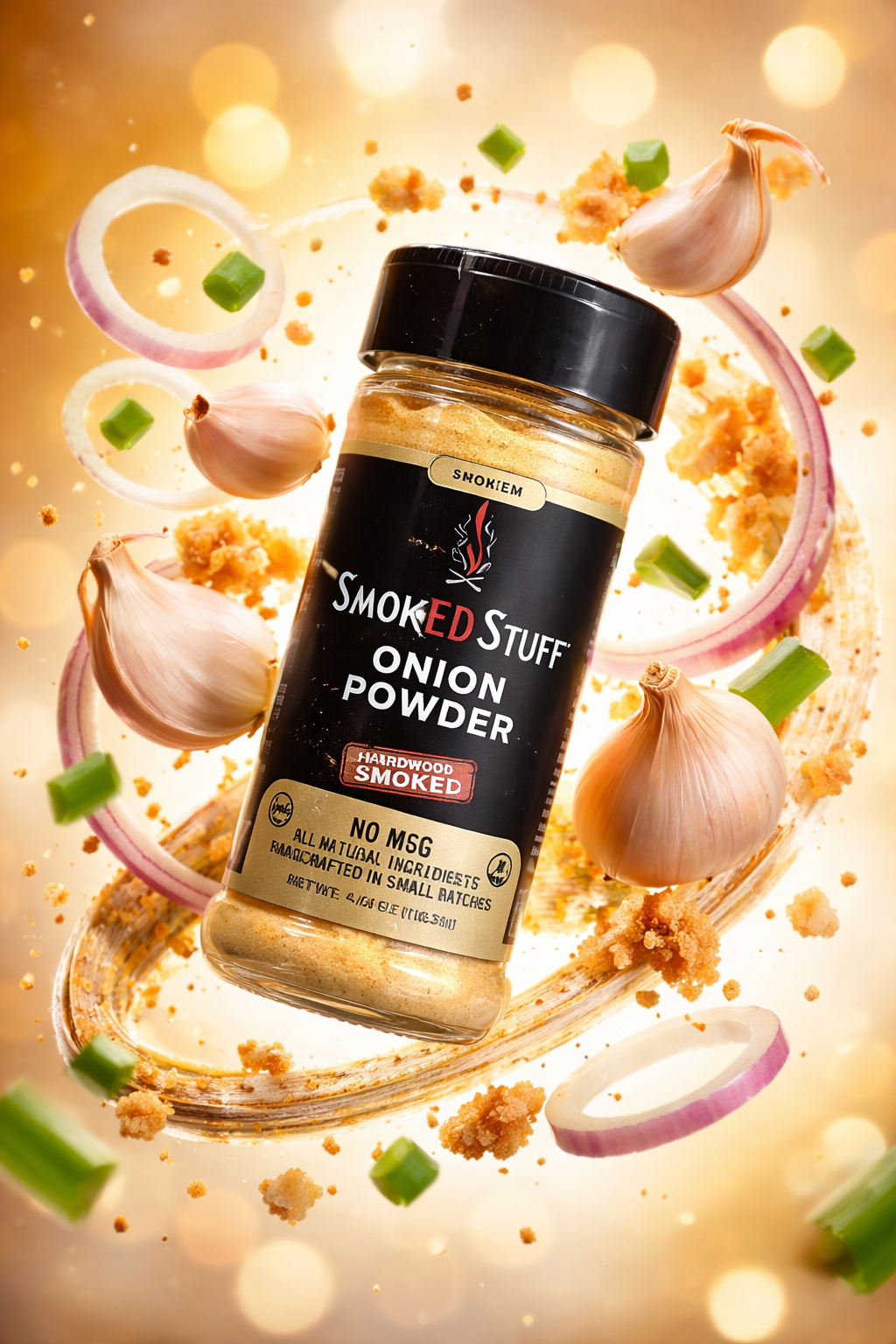
Smoked onion powder is one of those products where the ingredient panel tells you more than the marketing does. Plenty of brands bury the smoke inside a vague blend and let you assume the rest.
At SmokED Stuff, we name it on the panel. Here’s what that means and why it matters for your cooking.
How Onion Powder Is Made
Standard onion powder starts with California granulated onion — dehydrated white or yellow onions that have been sliced, dried at low temperature, and ground into a fine powder. When done right, the result is intensely concentrated onion flavor, far more potent by volume than fresh onion.
The quality of the base onion powder matters enormously. Cheap onion powder often comes from lower-grade onions with more filler and less flavor concentration. We start with high-quality granulated onion as our base.
What the Smoke Does
After the onion is dehydrated and ground, the smoke goes in. On our panel it is listed by name as Smoke Flavor, the second ingredient, right where you can read it.
Smoke settles into the oils the onion powder already carries, so the savory base and the smoke come through together instead of one masking the other. That means when you rub smoked onion powder onto a brisket that goes on a 250°F smoker for 12 hours, the smoke flavor is still there when it comes off.
Smoke in a dry seasoning always arrives as a flavoring of some kind. Nobody is holding a jar of loose powder over a fire pit and shipping it the same afternoon. The honest move is to say so on the label instead of hiding it inside a catch-all word like spices.
What Is Actually on the Panel
Our Smoked Onion Powder panel reads: Granulated Onion Powder, Smoke Flavor, Dehydrated Rice Hulls (Anti-Caking), Natural Flavors. Four ingredients, every one of them named.
🌾 Rice Hulls — The Honest Anti-Caking Agent
Most commercial rubs use silicon dioxide or other chemical anti-caking agents you’d need a chemistry degree to pronounce. The Smoked Onion Powder uses rice hulls — the outer husk of a rice grain, ground fine. It’s 100% natural, completely flavorless, and its only job is to keep the rub free-flowing so you get a consistent, even coat every time you reach into the jar. Nothing to hide, so we tell you exactly what it is.
How to Use Smoked Onion Powder
In BBQ Rubs
Smoked onion powder is one of the most versatile components in a rub. It adds savory depth without competing with salt or heat. Use it as a base layer in any rub going on beef, pork, or chicken.
In Marinades
Whisk into oil-based marinades for steaks or chicken thighs. The smokiness carries into the meat even before it hits the grill.
On Burgers
Mix directly into ground beef before forming patties. The smoke becomes part of the burger itself, not just a surface seasoning.
On Grilled Vegetables
Toss corn, zucchini, or bell peppers in olive oil and smoked onion powder before grilling. You get a grilled-vegetable flavor without needing the grill to deliver all of it.
In Soups and Braises
Add to chili, bean soups, or braised short ribs. The smoke stays present through long cooking times, adding a subtle campfire note that plays well with tomato and beef stock.
The Bottom Line
If your onion powder tastes flat, read the panel. The smoke should be there in plain words, not folded into a generic blend you have to guess at.
Smoked onion powder smells different the moment you open the jar, and it changes what a rub tastes like in everything you put it in.
Shop Smoked Onion Powder — smoke named right on the panel, nothing hidden.